
One of the final steps in become a full-fledged pilot is to pass your checkride. To do that, among other things, you need to nail your ground reference maneuvers.
These maneuvers are for more than just student pilots though. No matter how long we’ve held a pilot certificate, going back to the basics has value.
We’re going to review how to fly each ground reference maneuver on the private pilot checkride (plus a bonus one that only commercial pilot and CFI candidates are tested on).
We will also recap the aircraft handling skills each move helps us to build and improve then warn about the most common errors pilots make.
Stay with us till the end when we share our top two secrets to acing all these maneuvers.
First, let’s get started with the “why.”
 Why do we practice ground reference maneuvers?
Other than the obvious answer of passing our checkride, what is the greater purpose of ground reference maneuvers and why are they on the test in the first place?
The purpose of ground reference maneuvers is to learn how to accurately maintain our aircraft position and ground track in relation to chosen ground-based reference points. This means understanding the effects of wind and wind drift.
The FAA’s Ground Reference Maneuvers publication highlights some of the practical reasons that ground reference maneuvers are part of the greater list of aircraft handling skills all pilots need to learn.
Ground reference maneuvers help us:
The FAA also points out that “ground reference maneuvers are the principal flight maneuvers that combine the four fundamentals (straight-and-level, turns, climbs, descents) into a set of integrated skills that the pilot uses in their everyday flight activity…From every takeoff to every landing, a pilot exercises these skills in controlling the airplane.”
So, what do you think? Are you convinced there’s more to it than just passing the test and that you are in fact learning and continuing to practice these skills for a reason?
Good. Let’s jump right into the maneuvers.
The private pilot ground reference maneuvers you will need to master and perform for your checkride are:
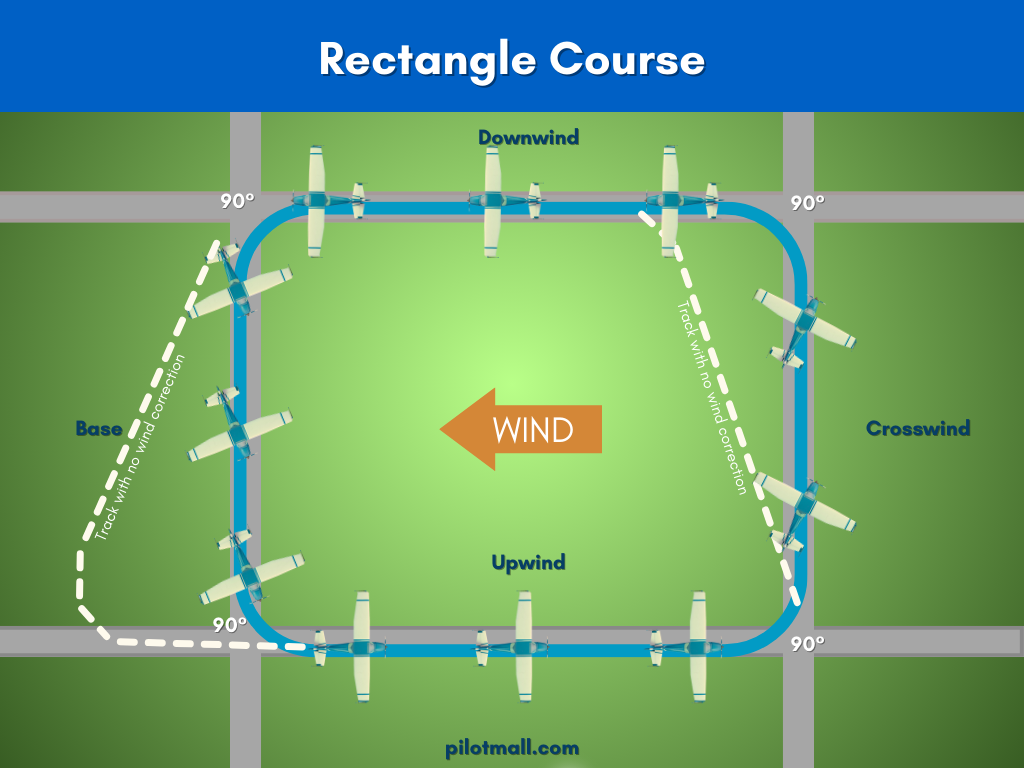 Rectangular Courses
Rectangular course maneuvers are one of the first flight maneuvers student pilots learn. In a rectangular course, pilots fly two sets of parallel lines to form a box shape. This maneuver simulates flying a traffic pattern.
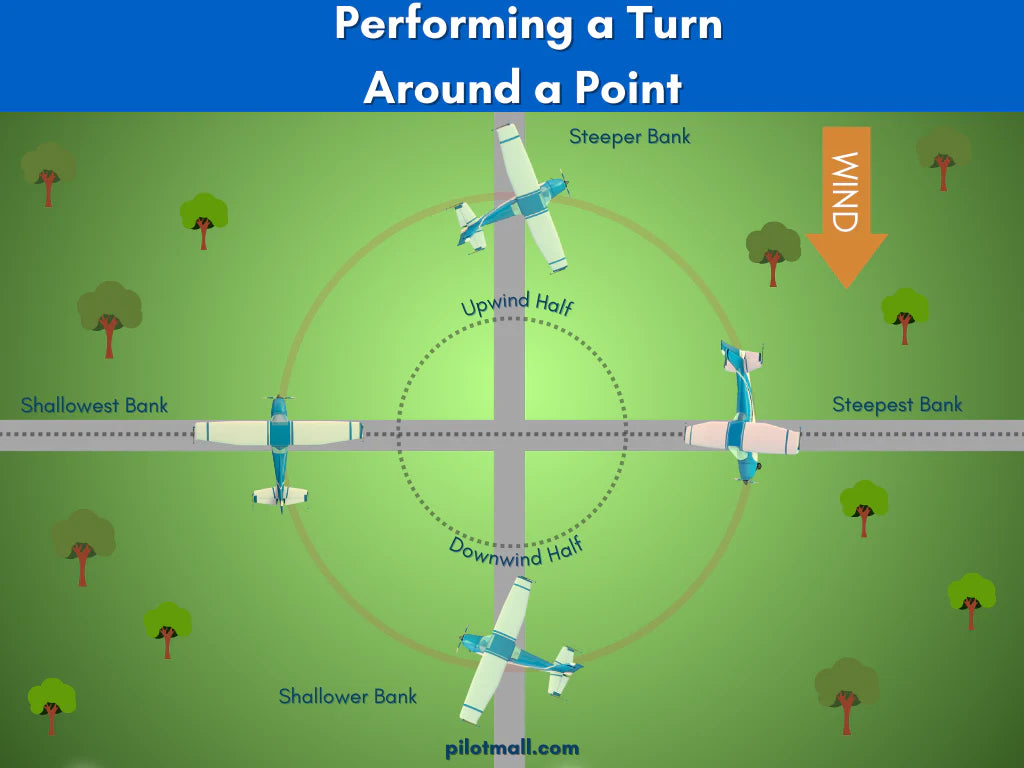
During Turns Around a Point, the goal is to fly a constant radius turn so your flight path makes a perfect circle around your chosen ground-based reference point.
Check out Fly8MA’s turns around a point tutorial for good visuals and a full run down of the maneuver.
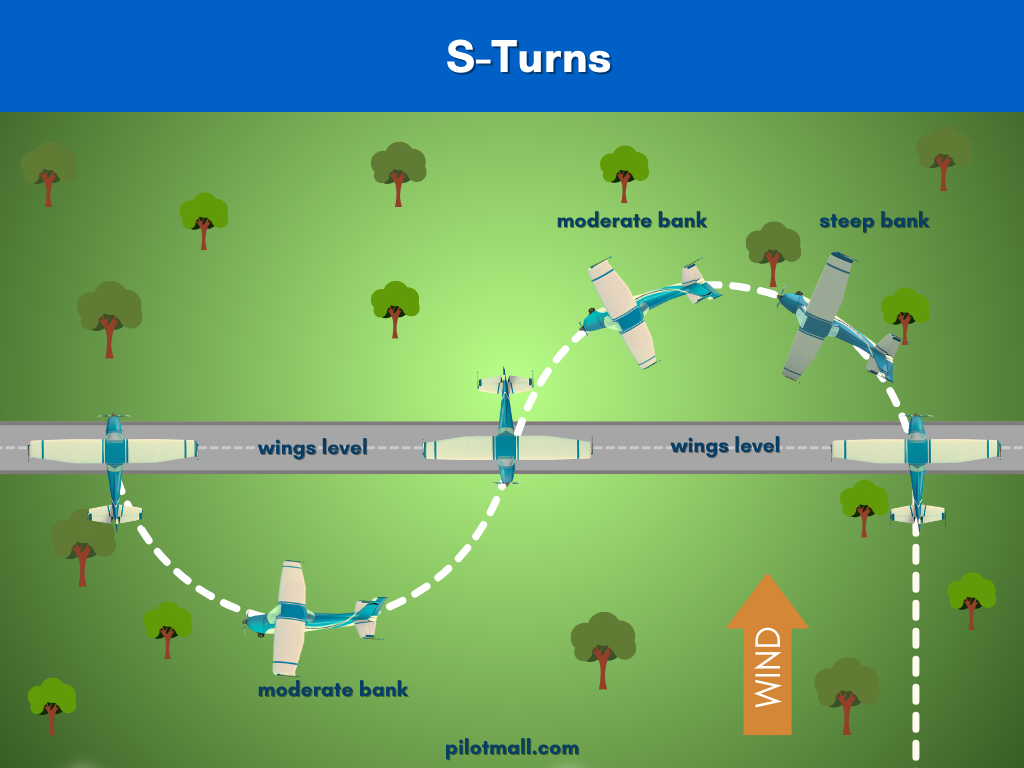 S-Turns
S-Turns are like turns around a point, but as you fly an s-shaped flight path over a straight-line reference point, you will make a half circle in a left bank and the other half in a right bank.
Fly8MA has a good S-turn tutorial that illustrates the maneuver and the relative bank angles throughout.
Pro Tip: The secret to acing this maneuver is to remember that your wings should be level each time you cross your straight-line reference point. Also, choose a reference point perpendicular to the wind as this makes the maneuver easier.
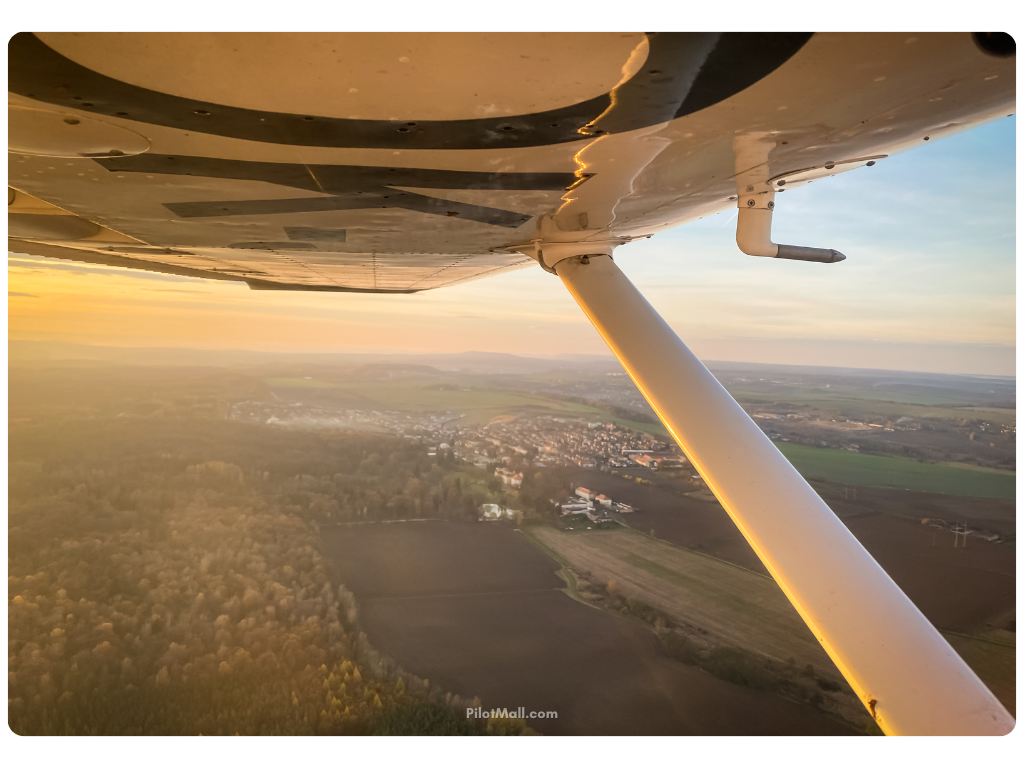 Right side aerial view from Cessna" />What Altitude are Ground Reference Maneuvers Usually Flown At?
Ground reference maneuvers are usually flown at low altitudes between 600 and 1,000 feet AGL. Once you choose your maneuver altitude, you should stay within 100 feet of that initial altitude throughout the whole maneuver.
 How to Choose the Best Reference Point for Ground Reference Maneuvers
It’s easier to fly a successful maneuver if you’ve chosen the right type of point or points. Options will, of course, vary depending on where you’re flying, but best choices are objects that are easily visible from your maneuver altitude. When the maneuver involves more than one point, try to choose points that are similar in size and proportion if possible.
 Commercial Pilot & CFI Ground Reference Maneuver (Bonus for Private Pilots)
Private pilots are only tested on the three ground reference maneuvers we already covered, but if you want to learn about a next level skill, stick around.
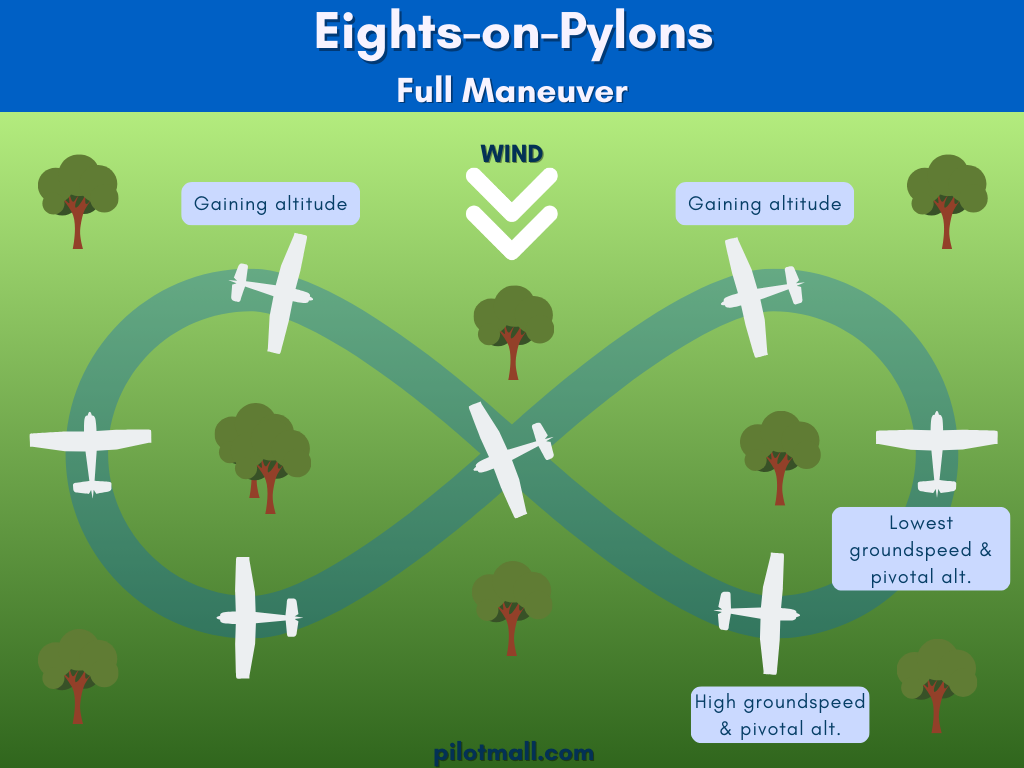
Commercial pilot and certified flight instructor candidates learn an advanced ground reference skill called eights-on-pylons. This maneuver takes the fundamental aircraft handling skills you learned from your private pilot ground reference maneuvers and builds on them.
Eights on pylons requires pivotal altitude calculations, an understanding of the relationship between groundspeed and pivotal altitude, plus the ability to adjust for shifts in the relative locations of your reference points and the pylons.
If you want to learn more about this maneuver, we covered it and its intermediary “eights around pylons” stepping stone skill in detail in our pivotal altitude explained post. Eights on pylons are also covered in the MzeroA Ground Reference Fundamentals Flight Training video.

Finally, our best pro tips. If you remember and use these two keys, you will be flying near perfect ground reference maneuvers and be ready for your checkride.
In addition to the blog posts linked above, review your copy of Gleim Private Pilot Flight Maneuvers for a thorough refresher of not only ground reference maneuvers but also other flight maneuvers pilots need to know.
We’d love to hear from you. Student pilots: which ground reference maneuver are you finding most challenging to master? Certified pilots, when was the last time you practiced flying ground reference maneuvers? What advice do you have for new pilots who are just starting out?
